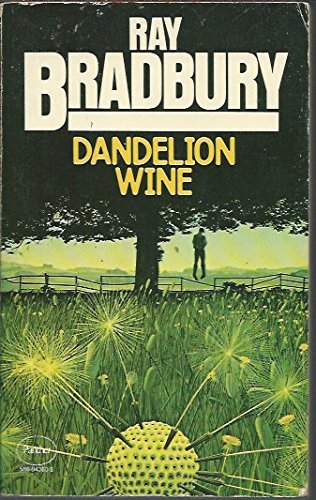
I was gathering images all of my life, storing them away, and forgetting them. Somehow I had to send myself back, with words as catalysts, to open the memories out and see what they had to offer. Under such treatment, of course, any decent idea folds up its paws, turns on its back, fixes its eyes on eternity, and dies. It was with great relief, then, that in my early twenties I floundered into a word-association process in which I simply got out of bed each morning, walked to my desk, and put down any word or series of words that happened along in my head. I would then take arms against the word, or for it, and bring on an assortment of characters to weigh the word and show me its meaning in my own life. An hour or two hours later, to my amazement, a new story would be finished and done. The surprise was total and lovely. I soon found that I would have to work this way for the rest of my life.
Bees do have a smell, you know, and if they don’t they should, for their feet are dusted with spices from a million flowers.
oh fuck ive read this ravine bit before
Waukegan was Green Town was Byzantium, with all the happiness that that means, with all the sadness that these names imply. The people there were gods and midgets and knew themselves mortal and so the midgets walked tall so as not to embarrass the gods and the gods crouched so as to make the small ones feel at home. And, after all, isn’t that what life is all about, the ability to go around back and come up inside other people’s heads to look out at the damned fool miracle and say: oh, so that’s how you see it!? Well, now, I must remember that.
The fire balloon still drifts and burns in the night sky of an as yet unburied summer.
Why and how?
Because I say it is so.
At night, when the trees washed together, he flashed his gaze like a beacon from this lighthouse in all directions over swarming seas of elm and oak and maple.
"Sunsets we always liked because they only happen once and go away."
"But, Lena, that's sad."
"No, if the sunset stayed and we got bored, that would be a real sadness."
He folded his arms and smiled a magician’s smile. Yes, sir, he thought, everyone jumps, everyone runs when I yell. It’ll be a fine season. He gave the town a last snap of his fingers.
Doors slammed open; people stepped out. [[Megalopolis]] ahh bozo
watermelons lying like tortoise-shell cats slumbered by sun
Mr. Sanderson, don’t you think you owe it to your customers, sir, to at least try the tennis shoes you sell, for just one minute, so you know how they feel? People forget if they don’t keep testing things. United Cigar Store man smokes cigars, don’t he? Candy-store man samples his own stuff, I should think. So . . .
Mr. Sanderson stood in the sun-blazed door, listening. From a long time ago, when he dreamed as a boy, he remembered the sound. Beautiful creatures leaping under the sky, gone through brush, under trees, away, and only the soft echo of their running left behind.
“Antelopes,” said Mr. Sanderson. “Gazelles.”
He bent to pick up the boy’s abandoned winter shoes, heavy with forgotten rains and long-melted snows. Moving out of the blazing sun, walking softly, lightly, slowly, he headed back toward civilization . .
Yes, he thought, to make a contraption that in spite of wet feet, sinus trouble, rumpled beds, and those three-in-the-morning hours when monsters ate your soul, would manufacture happiness, like that magic salt mill that, thrown in the ocean, made salt forever and turned the sea to brine. Who wouldn’t sweat his soul out through his pores to invent a machine like that? he asked the world, he asked the town, he asked his wife!
Somewhere, a book said once, all the talk ever talked, all the songs ever sung, still lived, had vibrated way out in space and if you could travel to far Centauri you could hear George Washington talking in his sleep or Caesar surprised at the knife in his back. What about light then? All things, once seen, they didn’t just die, that couldn’t be. It must be then that somewhere, searching the world, perhaps in the multi–boned honeycombs where light has an amber sap stored by pollen–fired bees, Or in the thirty thousand lenses of the noon dragonfly’s gemmed skull you must find all the colors and sights of the world in any one year. Or pour one single drop of this dandelion wine beneath a microscope and perhaps the entire world of July fourth would firework out in Vesuvius showers.
oh ive read the old lady story before too
“What about Shiloh?”
“There’s never been a year in my life I haven’t thought, what a lovely name and what a shame to see it only on battle records.”
John had closed his eyes and screwed up his face. “Doug, the Terle house, upstairs, you know?”
“Sure.”
“The colored windowpanes on the little round windows, have they always been there?”
“Sure.”
“You positive?”
“Darned old windows been there since before we were born. Why?”
“I never saw them before today,” said John. “On the way walking through town I looked up and there they were. Doug, what was I doing all these years I didn’t see them?”
“You had other things to do.”
“Did I?” John turned and looked in a kind of panic at Douglas. “Gosh, Doug, why should those dam windows scare me? I mean, that’s nothing to be scared of, is it? It’s just . . .” He floundered. “It’s just, if I didn’t see these windows until today, what else did I miss? And what about all the things I did see here in town? Will I be able to remember them when I go away?”
“Anything you want to remember, you remember. T went to camp two summers ago.
Up there I remembered.”
“No, you didn’t! You told me. you woke nights and couldn’t remember your mother’s face.”
“No!”
“Some nights it happens to me in my own house; scares heck out of me. I got to go in my folks’ room and look at their faces while they sleep, to be sure! And I go back to my room and lose it again. Gosh, Doug, oh gosh!” He held onto his knees tight. “Promise me just one thing, Doug. Promise you’ll remember me, promise you’ll remember my face and everything. Will you promise?”
“Easy as pie. Cot a motion-picture machine in my head. Lying in bed nights I can just turn on a light in my head and out it comes on the wall, clear as heck, and there you’ll be, yelling and waving at me.”
“Shut your eyes, Doug. Now, tell me, what color eyes I got? Don’t peek. What color eyes I got?”
Douglas began to sweat. His eyelids twitched nervously. “Aw heck, John, that’s not fair.”
“Tell me!”
“Brown!”
John turned away. “No, sir.”
“What do you mean, no?”
“You’re not even close!” John closed his eyes.
“Turn around here,” said Douglas. “Open up, let me see.”
“It’s no use,” said John. “You forgot already. Just the way I said.
“Turn around here!” Douglas grabbed him by the hair and turned him slowly.
“Okay, Doug.” John opened his eyes.
“Green.” Douglas, dismayed, let his hand drop. “Your eyes are green . . . Well, that’s close to brown. Almost hazel!”
“Doug, don’t lie to me.” “All right,” said Doug quietly. “I won’t.”
They raced along the railroad tracks, opened their lunch in brown-paper sacks, and sniffed deeply of the wax-wrapped deviled-ham sandwiches and green-sea pickles and colored peppermints. They ran and ran again and Douglas bent to scorch his ear on the hot steel rails, hearing trains so far away they were unseen voyagings in other lands, sending Morse-code messages to him here under the killing sun.
They pounded down the tracks, laughing, flailing the air. There went John Huff, not touching the ground at all. And here came Douglas, touching it all the time.
“Just one game,” said John. “Then I got to go home. The train leaves at nine. Who’s going to be ‘it'?”
“Me,” said Douglas.
“That the first time I ever heard of anybody volunteering to be ‘it,’ “said Tom.
“Frozen statues, every single one of you, the next three minutes!” said John.
Douglas felt John walking around him even as he had walked around John a moment ago. He felt John sock him on the arm once, not too hard. “So long,” he said.
Then there was a rushing sound and he knew without looking that there was nobody behind him now.
Far away, a train whistle sounded.
“Like I say, you stick around and don’t let nothing happen.”
“You can depend on me,” said Tom.
“It’s not you I worry about,” said Douglas. “It’s the way God runs the world.”
And then there is that day when all around, all around you hear the dropping of the apples, one by one, from the trees. At first it is one here and one there, and then it is three and then it is four and then nine and twenty, until the apples plummet like rain, fall like horse hoofs in the soft, darkening grass, and you are the last apple on the tree; and you wait for the wind to work you slowly free from your hold upon the sky, and drop you down and down. Long before you hit the grass you will have forgotten there ever was a tree, or other apples, or a summer, or green grass below. You will fall in darkness . . .
He wanted to say, “You’re still there, aren’t you? All of: you people in that city in the time of the early siesta, the shops closing, the little boys crying loteria nacional para hoy!
to sell lottery tickets. You are all there, the people in the city. I can’t believe I was ever among you. When you are away I: from a city it becomes a fantasy. Any town, New York, Chicago, with its people, becomes improbable with distance. Just as I am improbable here, in Illinois, in a small town by a ’ quiet lake. All of us improbable to one another because we are not present to one another. And it is so good to hear the sounds, and know that Mexico City is still there and the people moving and living . . .”
“Second harvest of the summer. June’s on the shelf. Here’s July. Now, just-August up ahead.”
Douglas raised the bottle of warm dandelion wine but did not set it on the shelf. He saw the other numbered bottles waiting there, one like another, in no way different, all bright, all regular, all self-contained.
There’s the day I found I was alive, he thought, and why isn’t it brighter than the others?
There’s the day John Huff fell off the edge of the world, gone; why isn’t it darker than the others?
wait chat is the lonely one a real person or not
are these ppl just over-engrossed in their own metaphor
RELISH! What a special name for the minced pickle sweetly crushed in its white-capped jar. The man who had named it, what a man he must have been. Roaring, stamping around, he must have tromped the joys of the world and jammed them in this jar and writ in a big hand, shouting, RELISH! For its very sound meant rolling in sweet fields with roistering chestnut mares, mouths bearded with grass, plunging your head fathoms deep in trough water so the sea poured cavernously through your head. RELISH!
“No, sir, Doug, Tom, you’ll find as you get older the days kind of blur . . .can’t tell one from the other . . .”
“But, heck,” said Tom. “On Monday this week It rollerskated at Electric Park, Tuesday I ate chocolate cake, Wednesday I fell in the crick, Thursday fell off a swinging vine, the week’s been full of things! And today, I’ll remember today because the leaves outside are beginning to get all red and yellow. Won’t be long they’ll be all over the lawn and we’ll jump in piles of them and burn them. I’ll never forget today! I’ll always remember, I know!”
Grandfather looked up through the cellar window at the late-summer trees stirring in a colder wind. “Of course you will, Tom,” he said. “Of course you will.”
rereading intro: Along the way I came upon and collided, through word-association, with old and true friendships. I borrowed my friend John Huff from my childhood in Arizona and shipped him East to Green Town so that I could say good-bye to him properly. is so sweet